Gold (XAUUSD) Cashback Explained: How the Per-Lot Rebate Actually Works
Gold cashback works the same way as forex cashback — a rebate on qualifying closed lots — but gold's standard lot (100 troy ounces) and typically wider dollar spread mean the per-lot dollar amounts involved can look different from a currency pair's; XM pays gold at the same flat rate as forex on each account type, while Exness's percentage-of-revenue model typically produces a different estimate for gold than for a forex pair.
By CB-Dogs Editorial5 min read
Disclosure: CB-Dogs receives an advertising (referral) fee — sometimes called an IB commission — from brokers for accounts opened or linked through us, and returns part of it to you as cashback, the same model used by cashback and points sites. This does not change your trading costs.
On this page
Gold (XAUUSD) cashback works the same underlying way as forex cashback — a rebate on qualifying closed-lot trading volume — but two things about gold specifically confuse traders comparing it to a currency pair: a "lot" of gold isn't the same contract size as a lot of EURUSD, and gold's per-lot rebate can end up meaningfully different from a forex pair's, for entirely mechanical reasons. This guide covers both.
Key takeaways
- Gold cashback is calculated the same way as forex cashback: a rebate on qualifying closed lots, credited per your broker's own reporting cycle — nothing special about gold changes that basic mechanism.
- A standard lot of gold is commonly 100 troy ounces, not the 100,000-unit convention used for forex pairs — see our pip value guide for the full contract-size comparison.
- XM pays cashback on gold (XAUUSD) at the same flat per-lot rate as forex, for a given account type — there's no separate 'gold rate' to look up.
- Exness pays cashback as a percentage share of the actual spread/commission revenue it earns, and that revenue is typically higher per lot on gold than on a forex pair like EURUSD — so Exness's gold estimate is usually a different figure from its forex estimate, not the same one.
- Cashback offsets part of your trading cost after the fact; it doesn't reduce gold's spread, commission, or swap, and gold's own volatility and contract size still matter for position sizing regardless of any rebate.
How gold cashback is calculated
Cashback on gold works exactly like cashback on any other qualifying instrument: your broker reports the closed-lot volume you traded (subject to the same minimum holding-time rule that applies to every instrument, to prevent latency abuse), and CB-Dogs credits a rebate based on that volume and your account type's rate. Nothing about the calculation mechanism changes because the instrument is gold instead of a currency pair — see our guide to how forex rebates work for the underlying mechanics if you haven't read it.
What is different about gold is the lot itself. A forex standard lot is 100,000 units of the base currency; a gold standard lot commonly uses a different convention — 100 troy ounces — covered in full in our guide to pip value on gold, silver, and oil. That contract-size difference is why gold's dollar-denominated spread, commission, and cashback figures don't map cleanly onto a forex pair's, even when both are quoted "per standard lot."
Why gold's per-lot rebate is often larger than a forex pair's
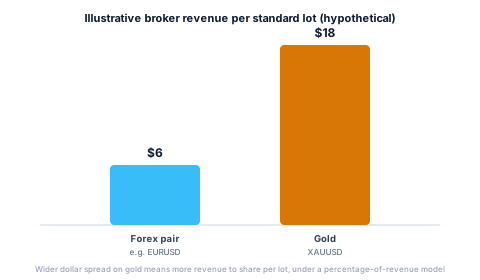
Gold is commonly quoted with a wider spread in dollar terms than a major forex pair — a point covered in our guide to gold trading costs explained. For a cashback program where the broker pays its partner a percentage share of the actual spread or commission revenue (rather than a fixed dollar amount per lot), a wider dollar spread on gold means more underlying revenue to share on each lot — so the resulting cashback estimate for gold can come out higher than for a tighter-spread forex pair, purely as a mechanical consequence of the revenue-share model. Our general guide to per-lot vs. percentage cashback covers this distinction in more depth.
This isn't universal, though — it depends entirely on which calculation model your broker's cashback uses, which is exactly why the next two sections treat XM and Exness separately rather than assuming one rule applies to both.
How XM treats gold cashback
| Account type | Rebate / lot (USDT) |
|---|---|
| StandardSpread-based account, no commission. | 9.0 |
| MicroRebate is calculated per 100,000 units of micro-lot volume (i.e. the same per-lot rate as Standard, scaled to micro-lot size). | 9.0 |
| KiwamiXM's tightened-spread account tier available in select regions. | 6.0 |
| ZeroCommission-based account. Rebate is paid in addition to the raw spread — commission you pay is unaffected. | 4.5 |
Provisional rate
XM's cashback is a fixed dollar amount per lot, set per account type, and gold is rebated at the same per-lot rate as forex pairs on each account type — there's no separate, higher "gold rate" to look up. If you trade both EURUSD and XAUUSD on the same XM Standard account, for example, each qualifying standard lot earns the same cashback regardless of which instrument it was. This is a direct consequence of XM's flat, fixed-per-lot model: because the rebate doesn't scale with the broker's actual revenue on that specific trade, gold's wider spread doesn't translate into a bigger cashback figure the way it can under a percentage model.
How Exness treats gold cashback
| Account type | Rebate / lot (USDT) |
|---|---|
| StandardNo separate commission — Exness pays partners a share of the spread. The estimate below is for EURUSD at our current partner rank; GBPUSD and gold (XAUUSD) typically pay more per lot, tighter-spread pairs less. Rates rise automatically as our trading volume with Exness grows. | 0.96 |
| ProNo separate commission — Exness pays partners a share of the spread, at a lower percentage than Standard. We don't yet have a reliable per-instrument estimate for this account type, so no figure is shown; your cashback is still 60% of the actual commission Exness pays us. | 0.0 |
| ZeroCommission-based account with near-zero raw spreads. The estimate below is for EURUSD at our current partner rank; other instruments vary. Cashback is paid in addition to the raw spread and does not affect the commission you pay Exness. | 0.25 |
| Raw SpreadCommission-based account with raw interbank spreads. Exness pays partners a fixed amount per lot that varies by instrument; we don't yet have a reliable figure to show, so no estimate is listed — your cashback is still 60% of the actual commission Exness pays us. | 0.0 |
Provisional rate
Exness's cashback is a percentage share of the actual spread or commission revenue Exness pays us, and — unlike XM — gold is estimated separately from forex pairs, since Exness's spread/commission revenue on metals is usually higher per lot than on a forex pair. The gold (XAUUSD) figure shown for Exness's Standard account is an estimate at our current partner rank, checked as of the date shown on the rate table, and it will differ from the EURUSD estimate on the same account type. As with every Exness estimate, your actual cashback is always calculated from the real commission Exness reports for your specific trades, not from the displayed figure — and estimates rise automatically as our trading volume with Exness grows.
A hypothetical worked example
Using clearly hypothetical, rounded numbers for one standard lot (100 oz) of gold — not a live quote from any broker:
| Illustrative figure | |
|---|---|
| Gold spread cost (1 standard lot) | $35.00 |
| Cashback credited | $9.00 |
| Net cost per lot | $26.00 |
The $9.00 cashback figure here is deliberately larger than a typical hypothetical forex-pair example elsewhere on this site, purely to illustrate the mechanic above — a real gold cashback figure depends entirely on your broker, account type, and (for a percentage-based program) the actual spread at the time you traded. Run your own numbers with the cashback calculator rather than assuming this example's proportions transfer directly to your account.
Cautions specific to gold
- Contract size, not just price, drives dollar risk. Because a standard lot of gold is commonly 100 oz rather than a forex-style 100,000 units, the dollar value of a given price move is easy to miscalculate if you assume forex conventions carry over — see our pip value on gold, silver, and oil guide before sizing a gold position.
- Gold's volatility can widen its spread sharply, especially around risk-off market moves and major macro headlines, which changes your actual trading cost independent of any cashback — our gold trading costs explained guide covers this in full.
- Leverage still applies to the full contract size. A cashback rebate doesn't change your margin requirement or your exposure — it's a partial, after-the-fact offset against cost already paid, not a reduction in the risk of the underlying position.
- None of this is trading advice. Cashback makes gold trading marginally cheaper over time; it doesn't change whether a given gold trade is a good idea.
Frequently asked questions
Yes, on both XM and Exness, gold is a qualifying instrument for CB-Dogs cashback, calculated the same way as forex: on qualifying closed-lot volume, subject to the same minimum holding-time rule.
Related reading
- Pip value on gold, silver, and oil — the contract-size convention behind gold's standard lot.
- Gold (XAU/USD) trading costs explained — spread, commission, and swap on gold specifically.
- Per-lot vs. percentage cashback — the calculation-model distinction behind XM's and Exness's different treatment of gold.
- Exness vs. XM: an honest comparison for cashback traders — how the two brokers' cashback models compare more broadly.
- XM broker page and Exness broker page — live rates by account type, including gold.
Ready to see your own numbers? Run the cashback calculator with your typical gold volume, or register with CB-Dogs before your next trade.
Risk warning: forex and CFD trading carries a high risk of losing money. Cashback does not offset trading losses. Nothing here is investment advice.
Related articles
Cashback on your XM trades — free, paid in USDT
Sign up free