Exness and USDT: How Deposits and Withdrawals Work (TRC20)
Depositing or withdrawing USDT at Exness generally means picking a supported network in your Personal Area, matching it to your wallet's address format, and letting the transaction confirm on-chain — the details vary by account and region, and this is a separate process from CB-Dogs cashback, which is paid only in USDT on TRC20 under our own rules.
By CB-Dogs Editorial6 min read
Disclosure: CB-Dogs receives an advertising (referral) fee — sometimes called an IB commission — from brokers for accounts opened or linked through us, and returns part of it to you as cashback, the same model used by cashback and points sites. This does not change your trading costs.
On this page
If you've searched "exness usdt trc20 deposit" or "exness usdt withdrawal," you're probably trying to move USDT into or out of your Exness trading account — different from receiving CB-Dogs cashback, also paid in USDT on TRC20 but through a completely separate system with its own rules. This guide covers the general mechanics of USDT at Exness, the mistakes that most often go wrong, and where the CB-Dogs side begins. For Exness's withdrawal categories beyond crypto, see our Exness withdrawal guide; to open and link an account first, see how to open an Exness account and link your cashback.
Key takeaways
- Exness lists cryptocurrency, including USDT, as one of its deposit and withdrawal categories — the same general shape as any crypto transfer: pick a network, match it to your wallet, confirm on-chain.
- TRC20 (the TRON network) is one of the networks USDT commonly moves on; whether Exness currently offers TRC20 alongside other networks such as ERC20 or BEP20 for your account and region should be confirmed on Exness's own deposit/withdrawal screen, since this can vary and change.
- The most common, most costly mistake with any crypto deposit or withdrawal is selecting a network that doesn't match the receiving address — the same rule that applies to any USDT transfer, not something specific to Exness.
- Exness's first-withdrawal-returns-to-the-same-method rule, covered in our general withdrawal guide, is reported to apply across payment categories including crypto — check your Personal Area for how it applies to your own deposit history.
- CB-Dogs cashback is a completely separate balance from your Exness trading account, paid out only in USDT on TRC20 under our own 10 USDT minimum and fee schedule — funding or withdrawing your Exness balance never touches it.
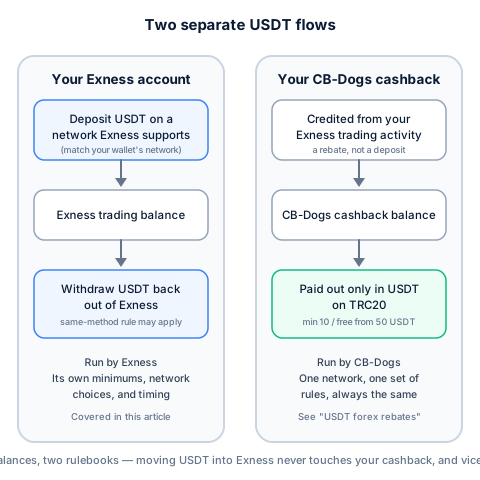
Two different things, both involving USDT
- USDT in your Exness trading account — money you deposit to fund trading, or withdraw from your trading balance afterward. Exness controls the available networks, minimums, and timing. That's the subject of this article.
- USDT as CB-Dogs cashback — the rebate we pay for trading through our partner link, credited separately from your Exness balance. We pay only on the TRC20 network, under our own fixed rules: a 10 USDT minimum, free from 50 USDT, and a flat 3 USDT fee below that. See the last section, or our USDT forex rebates guide, for the full mechanics.
How depositing USDT into Exness generally works
Funding a trading account with crypto follows the same basic shape at almost every broker that supports it, and nothing we could confirm suggests Exness differs: open the deposit section of your Exness Personal Area, select cryptocurrency then USDT, choose the network, and Exness shows a deposit address for it. Send USDT from your wallet or exchange to that address, on the same network specified, and the deposit becomes available once confirmed on-chain.
Which networks Exness currently lists for USDT (TRC20 is common industry-wide; Exness is widely reported to also support others such as ERC20), the minimum deposit, and the exact Exness crypto deposit time (how many confirmations are required before funds are credited) — we couldn't independently confirm exact figures from Exness's own pages. What's true regardless: the network you select has to match the network your sending wallet or exchange actually used — a mismatch is a network-level problem neither party can undo afterward.
How withdrawing USDT from Exness generally works
Withdrawing follows the same shape in reverse: request a crypto withdrawal, select USDT, choose the destination network, and provide the receiving address — again matching what your destination wallet or exchange supports. Our general Exness withdrawal guide covers the broader processing timeline and fee pattern (a non-instant request generally reviewed within 24 hours, no separate Exness fee reported, though the network can take a small cut); nothing about that changes specifically for crypto.
One rule worth carrying over: Exness's reported first-withdrawal-returns-to-the-same-method rule — your first withdrawal after a deposit returns to that same method, up to the deposited amount, before remaining funds go elsewhere — is described in sources we checked as applying across payment categories, including crypto. Depositing and withdrawing both in USDT is unlikely to hit this; it matters more if you deposited by another method (say, a card) and want your first withdrawal entirely in USDT instead. Check your Personal Area for how it applies to your own history.
Common mistakes with USDT at Exness
- Choosing the wrong network. The single most consequential mistake with any USDT transfer, not unique to Exness: a mismatch between the sending and receiving network. Send on ERC20 to a TRC20-only address (or the reverse) and the funds are typically unrecoverable — the networks don't talk to each other. Always match your wallet's network to the one Exness's screen shows.
- Assuming a memo or tag is needed. TRC20 addresses generally don't use a memo/destination-tag system the way some other networks do. If a screen does ask for one, provide it; otherwise don't add one where none was requested.
- Sending before identity verification is complete. Exness generally requires KYC before releasing funds — see our account-opening guide, which normally happens well before you'd be depositing at all.
- Reusing a previously used address without checking it. Address poisoning — a scammer planting a lookalike address in your history — is a real risk with any crypto transfer. See our USDT safety and address poisoning guide.
- Confusing this with CB-Dogs cashback. Depositing or withdrawing USDT at Exness has no effect on your CB-Dogs cashback balance, and vice versa — unrelated processes, covered next.
How this differs from receiving CB-Dogs cashback
Everything above is about your own money moving into or out of your Exness trading account. CB-Dogs cashback is a different balance entirely: it's the rebate we pay from the advertising (IB referral) fee Exness pays us based on your trading activity, credited to your CB-Dogs account — not your Exness account — and paid out under rules Exness has no part in.
CB-Dogs pays cashback exclusively in USDT on the TRC20 network — never any other network, and never any other payout method. Our own rules: a 10 USDT minimum withdrawal, free from 50 USDT, and a flat 3 USDT fee below that. Changing your registered payout wallet triggers a 24-hour hold before the next withdrawal, and receiving USDT on TRC20 doesn't require holding any TRX.
| Account type | Rebate / lot (USDT) |
|---|---|
| StandardNo separate commission — Exness pays partners a share of the spread. The estimate below is for EURUSD at our current partner rank; GBPUSD and gold (XAUUSD) typically pay more per lot, tighter-spread pairs less. Rates rise automatically as our trading volume with Exness grows. | 0.96 |
| ProNo separate commission — Exness pays partners a share of the spread, at a lower percentage than Standard. We don't yet have a reliable per-instrument estimate for this account type, so no figure is shown; your cashback is still 60% of the actual commission Exness pays us. | 0.0 |
| ZeroCommission-based account with near-zero raw spreads. The estimate below is for EURUSD at our current partner rank; other instruments vary. Cashback is paid in addition to the raw spread and does not affect the commission you pay Exness. | 0.25 |
| Raw SpreadCommission-based account with raw interbank spreads. Exness pays partners a fixed amount per lot that varies by instrument; we don't yet have a reliable figure to show, so no estimate is listed — your cashback is still 60% of the actual commission Exness pays us. | 0.0 |
Provisional rate
If you haven't linked your Exness account to CB-Dogs yet, see our guide to opening an Exness account and linking your cashback before you start trading, so your activity is tracked from the first lot.
Frequently asked questions
TRC20 is one of the networks USDT commonly moves on industry-wide, and Exness lists cryptocurrency, including USDT, as a funding category. Confirm the current network options on Exness's own deposit screen before sending, since exact options can vary and change.
Related reading
- Exness withdrawal: methods, times, and fees — the full breakdown of Exness's withdrawal categories beyond crypto, including the same-method rule and common problems.
- How to open an Exness account and link it to your cashback — start here before your first deposit.
- How to send USDT (TRC20) from an exchange — the exchange-side steps and pre-send checklist.
- TRC20 vs. ERC20 vs. BEP20 — why the network choice matters and how to tell the formats apart.
- USDT safety, scams, and address poisoning — verifying an address before you send.
- Forex rebates paid in USDT — how CB-Dogs' own cashback payout works end to end.
- Exness broker page — account-opening link and current cashback rates.
Ready to start tracking your cashback? Register with CB-Dogs, set up your TRC20 wallet address, and link your Exness account before your next deposit.
Risk warning: forex and CFD trading carries a high risk of losing money. Cashback does not offset trading losses. Nothing here is investment advice.
Related articles
Cashback on your XM trades — free, paid in USDT
Sign up free